
A green and scalable process was developed for the extraction, purification, and functional application of chlorogenic acid (CA) from Dracocephalum tanguticum Maxim. Response surface methodology optimized the extraction conditions to 75% ethanol, a liquid–solid ratio of 1:15 (w/v), 70 °C, and 3 h, resulting in a CA yield of 6.68% (w/w). Purification using AB-8 macroporous resin followed by preparative LC afforded a CA purity exceeding 99%, with an overall recovery of 82.86%. Notably, only ethanol and water were used throughout the entire process. The α-glucosidase inhibitory activity of CA was further enhanced by combination with rosmarinic acid (RA). Enzyme inhibition assays showed the strongest synergistic effect at a CA:RA ratio of 4:6, yielding an IC50 value of 0.5828 ± 0.0166 mg/mL, which corresponds to an approximately 1.37-fold stronger inhibitory activity compared with CA alone, along with an inhibition enhancement of 16.429%. Kinetic analysis indicated a mixed-type inhibition mode. Spectroscopic analyses and molecular docking revealed that CA and RA simultaneously bind to the active site of α-glucosidase via hydrogen bonding and hydrophobic interactions, inducing conformational changes that restrict substrate access. Overall, this study provides an environmentally friendly strategy for the scalable production of CA and supports its potential application as a natural α-glucosidase inhibitor.
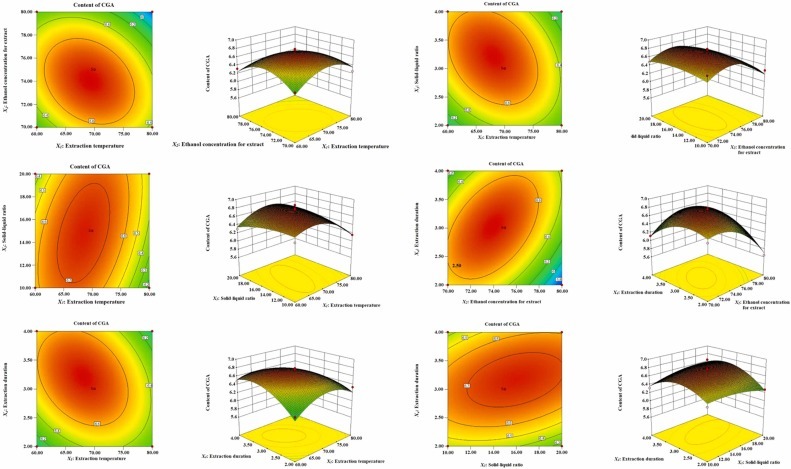
Fig. 2. 3D response surface plots illustrating the effects of various parameters on the yield of CA.
The link below will guide you to the reading:
https://authors.elsevier.com/sd/article/S0926-6690(26)00599-6